
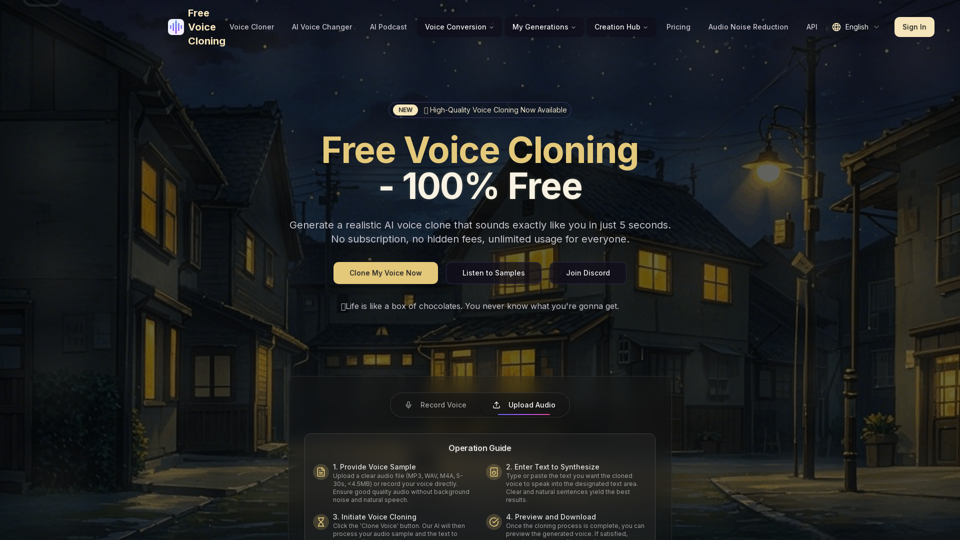
What's AI Voice Cloning
AI Voice Cloning is a cutting-edge technology that replicates a person's voice using artificial intelligence. This process involves recording voice data, training a deep learning model on that data, and generating synthetic speech that closely resembles the original voice. AI voice cloning is transforming text-to-speech applications by offering high-quality, realistic voice options.
Benefits of AI Voice Cloning
- High-Quality Replication: Achieve 99% accuracy in voice replication, capturing nuances, accents, and inflections.
- Multilingual Support: Generate voiceovers in multiple languages, expanding global reach.
- Cost-Effective: Reduces the need for expensive recording equipment and voice actors.
- Time Efficiency: Create voice clones quickly without extensive recording sessions.
- Versatility: Ideal for podcasts, audiobooks, video games, and more.
How to Use AI Voice Cloning
Step 1: Voice Data Collection
- Record high-quality audio samples of the target voice.
- Ensure recordings are clear and free of background noise.
Step 2: Voice Model Training
- Upload the audio data to the AI platform.
- The AI analyzes the data to capture unique vocal characteristics.
Step 3: Synthesis
- The AI synthesizes the voice to create a digital model.
- This model can generate speech that mimics the original voice.
Step 4: Integration and Usage
- Use the cloned voice in various applications, such as text-to-speech, voiceovers, and virtual assistants.
- Seamlessly integrate via API for streamlined content creation.
Key Features of AI Voice Cloning
- Real-Time Cloning: Create voice clones in seconds for rapid content generation.
- High-Resolution Audio: Capture every vocal inflection for a realistic output.
- Custom Voice Creation: Develop unique voice models for personalized applications.
- User-Friendly Interface: Navigate the platform easily, even for beginners.
- API Integrations: Integrate with existing systems for enhanced workflow.
Ethical Considerations
- Consent: Obtain explicit permission before cloning a voice.
- Data Security: Ensure data is securely stored and managed.
- Legal Compliance: Adhere to regulations regarding voice usage and intellectual property rights.
Conclusion
AI Voice Cloning offers a revolutionary approach to voice synthesis, enabling high-quality, realistic voice applications across various industries. By following ethical guidelines and leveraging advanced AI technology, users can create versatile voice models that enhance content creation and engagement.